
Is the Indian economy perfectly balanced?
Context:
-
India’s Finance Ministry recently claimed the economy is in a “Goldilocks” phase — a rare state of optimal balance: moderate growth, low inflation, and supportive monetary conditions.
-
However, this claim is being critically questioned in light of underlying structural issues affecting common households.
Core Issues Challenging the ‘Perfectly Balanced’ Narrative:
1. Stagnant Real Wages vs Inflation:
-
Real wage growth has not kept pace with inflation:
-
In 2023, nominal salary hikes averaged 9.2%, but real wage growth was just 2.5%.
-
In 2020, real wage growth turned negative (-0.4%).
-
-
Food inflation volatility disproportionately affects lower-income groups:
-
CFPI hit 10.87% in Oct 2024 vs CPI of 6.21%.
-
Despite a recent fall in food inflation (0.99% in May 2025), the prior volatility undermines household savings and consumption.
-
2. Income Inequality:
-
India’s economic recovery is K-shaped:
-
Some sectors/individuals thrive, others stagnate.
-
Gini coefficient (taxable income) shows improvement — from 0.489 (AY13) to 0.402 (AY23) — but excludes large informal sector and wealth data.
-
-
Surge in billionaires vs stagnant real wages for the poor reflects concentration of gains.
3. Tight Fiscal Space:
-
Fiscal consolidation is ongoing, but concerns persist:
-
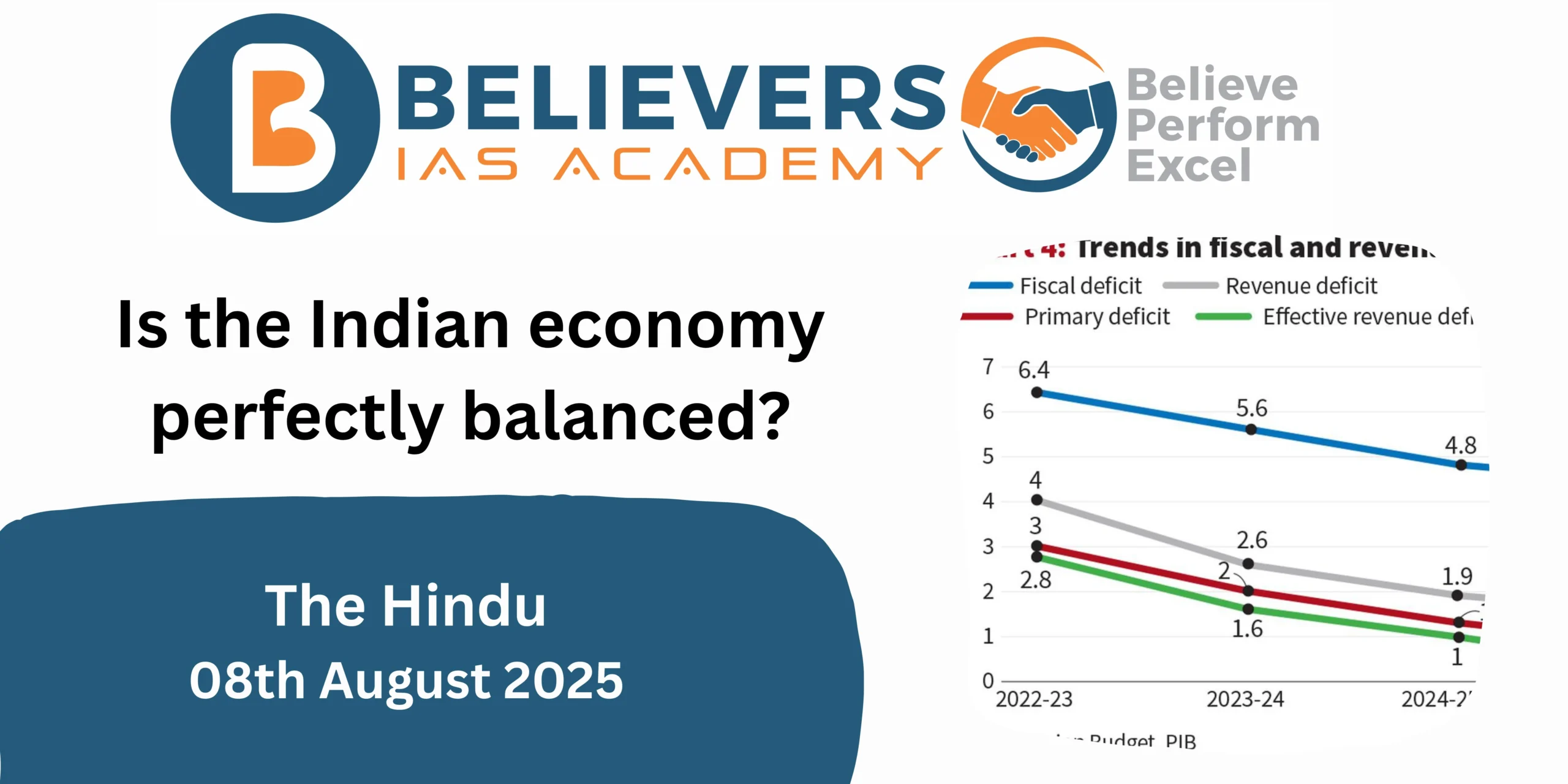
Fiscal deficit target: 6.4% (2022–23) to 4.4% (2025–26).
-
Public debt-to-GDP: ~81% vs FRBM target of 60%.
-
-
High deficits and debt reduce public spending capacity on essential services and may crowd out private investment.
Why the ‘Goldilocks’ Claim Falls Short:
| Claim | Ground Reality |
|---|---|
| 📊 GDP growth at 7.6% | Benefits not evenly distributed |
| 🧾 Low CPI Inflation | Core and food inflation remain high and volatile |
| 💰 Stable macro backdrop | Stagnant real wages, poor job quality, and reduced household purchasing power |
| 🏛️ Sound fiscal policy | High deficits and debt limit public investment and resilience |
Critical Analysis:
-
Macroeconomic aggregates (GDP, CPI, etc.) do not reflect lived realities of millions.
-
The illusion of balance masks structural issues: informalisation, inequality, weak wage growth.
-
Without inclusive growth, income security, and fiscal strength, macro stability remains fragile.
Conclusion:
India is not in a perfectly balanced economic state. The ‘Goldilocks economy’ narrative, while comforting, is misleading when real wages stagnate, inequality widens, and fiscal leeway shrinks. A truly balanced economy must ensure:
-
Tangible improvements in household well-being,
-
Broad-based wage growth,
-
Strong social infrastructure,
-
And a sustainable fiscal roadmap.
Related Posts


