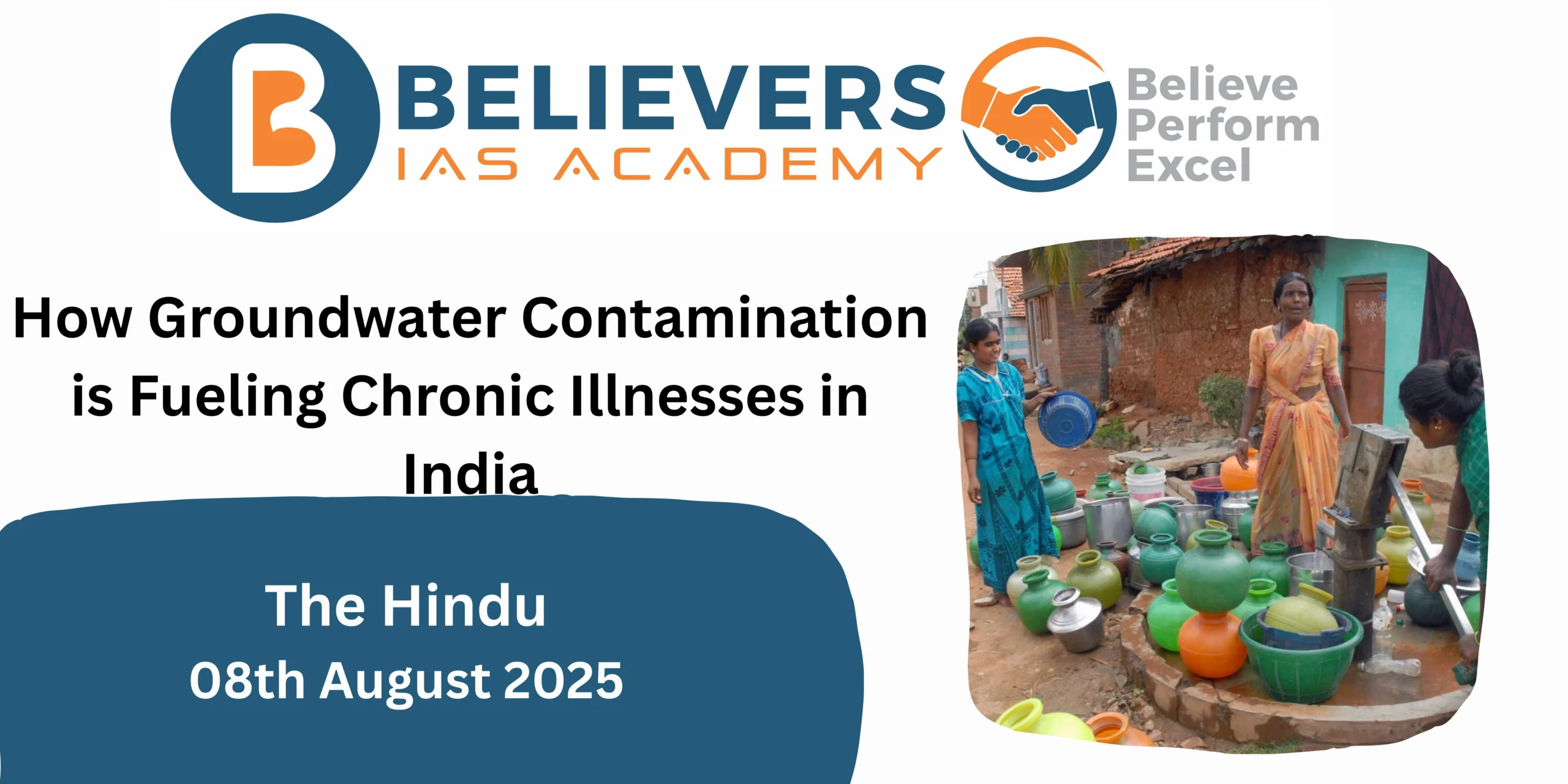
How Groundwater Contamination is Fueling Chronic Illnesses in India
Context:
-
Groundwater is India’s primary water source, supporting 85% of rural drinking water and 65% of irrigation.
-
However, widespread groundwater contamination is turning into a public health emergency.
-
The 2024 CGWB Report and other studies reveal a surge in toxic pollutants in groundwater — nitrate, fluoride, arsenic, uranium, heavy metals, and pathogens — with long-term health consequences.
Key Contaminants and Associated Health Risks:
| Contaminant | Prevalent States | Health Impact |
|---|---|---|
| Fluoride | Rajasthan, Telangana, Madhya Pradesh, Uttar Pradesh | Skeletal & dental fluorosis, stunted growth |
| Arsenic | Bihar, West Bengal, Uttar Pradesh, Assam | Cancer, gangrene, skin lesions, neurological damage |
| Nitrate | Punjab, Haryana, Karnataka, Delhi | Blue baby syndrome, reproductive toxicity |
| Uranium | Punjab (Malwa region), Andhra Pradesh | Kidney failure, organ toxicity |
| Heavy Metals (Lead, Mercury, Cadmium) | Gujarat, Uttar Pradesh, Maharashtra | Developmental delays, anaemia, cognitive dysfunction |
| Sewage/septic seepage | Odisha, urban slums | Cholera, hepatitis A & E, dysentery |
Examples of Localized Groundwater Death Zones:
-
Budhpur, Baghpat (UP): 13 deaths linked to industrial borewell contamination.
-
Jalaun (UP): Handpumps release fuel-like substances — likely underground fuel leakage.
-
Ballia (UP): Arsenic level 200 µg/L (20x WHO limit); over 10,000 cancer cases.
-
Paikarapur (Odisha): Sewage seepage from treatment plant affected 500+ residents.
Findings from Major Reports:
-
CGWB (2024):
-
Nitrate: Unsafe in 56% of districts.
-
Fluoride: Above limit in 9% samples; 66 million affected.
-
Arsenic: Above WHO limit in 29 UP districts; Bagpat 40 µg/L (4,000x safe limit).
-
-
ICMR & WHO Studies: Chronic exposure leading to cancer, developmental issues, organ damage.
Structural Causes Behind the Crisis:
1. Institutional Fragmentation:
-
Agencies like CGWB, CPCB, SPCBs, and Ministry of Jal Shakti work in silos; lack coordination.
2. Weak Legal & Regulatory Framework:
-
Water Act (1974) covers surface water; no dedicated groundwater pollution law.
-
CGWB lacks enforcement power; SPCBs are underfunded.
3. Monitoring Deficits:
-
Lack of real-time, publicly accessible water quality data.
-
No health alert systems linked with water quality deterioration.
4. Industrial and Agricultural Mismanagement:
-
Unregulated discharge of industrial effluents, phosphate fertilizers, and pesticides.
-
Over-extraction of groundwater causes concentration of contaminants.
Implications:
-
Public Health: Rise in chronic diseases and developmental disorders; pressure on healthcare infrastructure.
-
Food Security: Contaminated irrigation water affects crop safety and soil health.
-
Economic Burden: Increased healthcare costs, lost productivity, and reduced labour efficiency.
-
Environmental Impact: Aquifer degradation, salinity intrusion, and ecosystem imbalance.
Way Forward: A Multi-Dimensional Groundwater Safety Strategy:
| Area | Recommendations |
|---|---|
| Legal Reforms | Draft a dedicated National Groundwater Pollution Control Law; empower CGWB |
| Monitoring | Establish real-time water quality monitoring networks integrated with health surveillance |
| Remediation | Promote bio-remediation, defluoridation units, arsenic filters, and safe drinking water schemes |
| Pollution Control | Enforce zero-liquid-discharge in industries; ban harmful agrochemicals |
| Decentralised Action | Enable community-driven groundwater governance; local water audits |
| Health Interventions | Targeted health screening and nutrition programs in high-risk districts |
Related Posts
Anti-defection law
Posted on