
Is India Getting Hotter?
Context
Several parts of India experienced heatwave and quasi-heatwave conditions in 2026, leading to concerns regarding rising temperatures, delayed monsoon onset and the possible emergence of El Niño conditions. Viral social media claims that India hosted the world’s hottest cities further intensified the debate on whether India is becoming significantly hotter.
Key Takeaway
Is India Getting Hotter?
Yes, in the long term due to climate change and urbanisation.
However:
- May 2026 was not an exceptionally hot month at the national level.
- Daytime temperatures were largely normal or below normal across most of the country.
- The larger concern is the long-term rise in heatwave frequency, duration and night-time temperatures.
What Happened in 2026?
Factors Raising Concern
- Heatwave and quasi-heatwave conditions in several cities.
- Delayed onset of the southwest monsoon.
- Possibility of emerging El Niño conditions.
- Viral reports claiming India had the world’s hottest cities.
El Niño and India
What is El Niño?
El Niño
El Niño refers to the periodic warming of sea surface temperatures in the central and eastern equatorial Pacific Ocean.
Impact on India
- Weakens monsoon circulation.
- Reduces rainfall.
- Increases temperatures.
- Raises drought risk.
- Increases likelihood of heatwaves and humid heatwaves.
Possible 2026 Effects
- Longer dry spells during monsoon.
- Reduced moisture availability.
- Increased heat stress, particularly in north-west India.
Was May 2026 Unusually Hot?
IMD Assessment: No
According to the India Meteorological Department:
Temperature Outlook
Maximum temperatures remained:
- Normal to below normal across most of India.
- Above normal mainly in:
- Southern Peninsula
- Parts of North-East India
- Parts of North-West India
Rainfall Outlook
- All-India rainfall projected at above 110% of Long Period Average (LPA).
What is Long Period Average (LPA)?
LPA is the average rainfall or temperature calculated over a long period (usually 30 years) and serves as the benchmark for classifying weather conditions as:
- Normal
- Above Normal
- Below Normal
Heatwaves: The Long-Term Concern
Findings from IMD Study (1961–2020)
Core Heatwave Zone (CHZ)
The CHZ includes: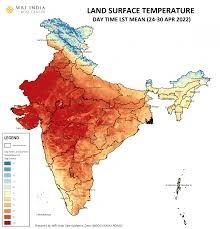
- Punjab
- Haryana
- Delhi
- Rajasthan
- Uttar Pradesh
- Gujarat
- Madhya Pradesh
- Chhattisgarh
- Bihar
- Jharkhand
- West Bengal
- Odisha
- Telangana
- Maharashtra (Marathwada, Vidarbha, Madhya Maharashtra)
- Coastal Andhra Pradesh
- Himachal Pradesh
- Uttarakhand
Key Trends
Increasing Heatwave Frequency
- Increased by 0.1 day per decade
Increasing Heatwave Duration
- Increased by 0.44 day per decade
Faster Rise in Night Temperatures
- Increased by approximately 0.21°C per decade
Why Night-Time Warming Matters
Higher night temperatures:
- Prevent human bodies from recovering from daytime heat.
- Increase heat stress and mortality.
- Raise energy demand for cooling.
Weather vs Climate
| Weather | Climate |
|---|---|
| Short-term atmospheric conditions | Long-term average pattern (30+ years) |
| Daily variations | Decadal trends |
| Temporary | Persistent |
UPSC Concept
A hot day or even a hot month does not prove climate change. Climate change is established through long-term temperature trends.
Viral Claim: “50 Hottest Cities in the World Were in India”
Should the Claim Be Accepted?- No. The claim requires caution.
Reasons
Limited Timeframe
- Ranking was based on a single day (27 April 2026).
- One day cannot establish climatic trends.
Geographical Bias
Many regions were excluded:
- West Asia
- Africa
- Australia
Methodological Concerns
- Based on 24-hour average temperatures rather than maximum temperatures.
- Favours cities with warmer nights.
- Disadvantages desert regions that cool rapidly after sunset.
- Methodology was not fully transparent.
Conclusion
The ranking does not provide reliable evidence that India was globally the hottest region.
Was April 2026 Hotter Than April 2025?
Daytime temperatures were generally cooler than in April 2025.
Why?
The IMD attributed this moderation to:
- Active Western Disturbances.
- Above-normal rainfall.
What are Western Disturbances?
Western Disturbance
These are eastward-moving storms originating in the Mediterranean region that bring rainfall and cooler temperatures to north-western India.
Urban Heat Islands (UHIs)
What is an Urban Heat Island?
Urban Heat Island
Urban areas become significantly warmer than nearby rural areas.
Causes
Land Cover Changes
Replacement of:
- Vegetation
- Soil
- Water bodies
with:
- Concrete
- Asphalt
- Buildings
Consequences
- Reduced evapotranspiration.
- Lower albedo (reflectivity).
- Poor ventilation.
- Heat trapped in urban structures.
Mechanism
During the Day
Buildings and roads absorb solar radiation.
During the Night
Stored heat is slowly released, keeping cities warmer.
Magnitude in India
Urban centres can be:
2–10°C warmer than surrounding rural areas, especially during the night.
Role of Air Conditioning
Cooling Indoors, Heating Outdoors
Air-conditioners:
- Remove heat from indoor spaces.
- Release waste heat into the external environment.
Consequences
- Increased ambient temperature.
- Greater electricity demand.
- Feedback loop of higher cooling requirements.
Is Urbanisation More Important Than Climate Change?
A 2024 study in the journal Nature Cities found:
Warming Trends
- Indian cities warming at 0.53°C per decade
- India overall warming at 0.26°C per decade
Attribution
- Around 38% of urban warming is due to urbanisation.
- Climate change remains the primary driver.
- Urbanisation amplifies regional warming by nearly 60%.
Conclusion
Urban Heat Islands intensify local temperatures, but climate change remains the dominant cause of long-term warming.
Implications for India
Environmental
- More frequent heatwaves.
- Increased drought risk.
- Higher water stress.
Economic
- Reduced labour productivity.
- Higher cooling and electricity demand.
- Agricultural losses.
Health
- Heatstroke and heat-related illnesses.
- Increased mortality.
- Greater vulnerability among urban poor.
Urban Planning
- Need for green infrastructure.
- Cool roofs and reflective surfaces.
- Better urban ventilation.
- Heat Action Plans.
Way Forward
Climate Adaptation
- Strengthen Heat Action Plans.
- Improve early warning systems.
- Expand climate-resilient infrastructure.
Sustainable Urbanisation
- Urban forests and green belts.
- Cool roofing technologies.
- Water-sensitive urban design.
Climate Mitigation
- Renewable energy transition.
- Energy-efficient buildings.
- Reduced dependence on fossil fuels.
Prelims Pointers
| Concept | Associated Feature |
|---|---|
| El Niño | Weak monsoon, hotter conditions |
| Western Disturbance | Winter/spring rainfall in NW India |
| Urban Heat Island | Cities warmer than rural areas |
| Long Period Average (LPA) | 30-year climatic benchmark |
| Core Heatwave Zone | Most heatwave-prone region of India |
UPSC Mains Question
- “Urban Heat Islands amplify the impact of climate change but do not replace it as the primary driver of rising temperatures.” Discuss in the context of increasing heat stress in Indian cities. (15 Marks, 250 Words)
- “India may not be experiencing record heat every year, but long-term climatic trends indicate growing heat stress. Examine the causes, consequences and adaptation strategies required to address rising temperatures in India.” (15 Marks, 250 Words)
Related Posts