
Is a Shift Underway in India’s Foreign Policy
Context
-
PM Narendra Modi attended the Shanghai Cooperation Organisation (SCO) summit in Tianjin (September 1, 2025), alongside Russian President Vladimir Putin and Chinese President Xi Jinping.
-
The summit showcased India’s balancing act amid growing global tensions between the West and Eurasian powers.
-
India’s longstanding strategic autonomy policy is being tested by current geo-economic and military developments.
Key Developments at the SCO Summit
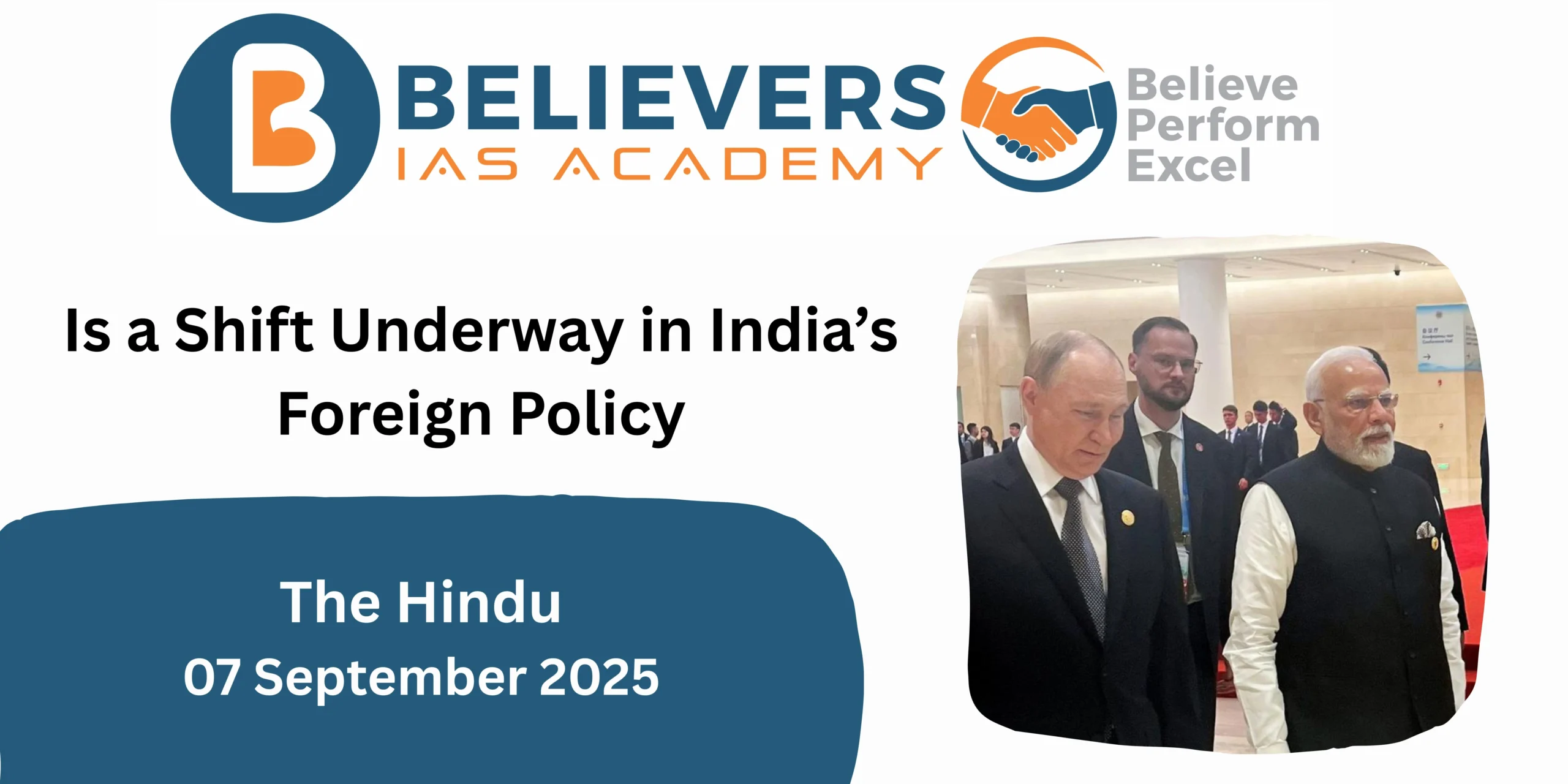
Photograph of Troika
-
The image of Modi, Xi, and Putin together garnered worldwide attention.
-
It raised concerns in the West, especially in the U.S., over India’s perceived shift towards Russia and China.
Statements from Leaders
-
Xi promoted a “Global Governance Initiative”.
-
Modi advocated for “civilisational dialogue” among SCO nations.
-
The SCO declaration criticised “coercive, unilateral” economic actions, seen as a response to U.S. tariffs and sanctions.
India–China Relations
Modi-Xi Meeting
-
First bilateral meeting since the Galwan clash in 2020.
-
Xi described India and China as “partners, not rivals”.
-
India softened its stance on linking border normalisation with broader diplomatic engagement.
-
Agreed to:
-
Discuss border issues via Special Representatives (Wang Yi & Ajit Doval).
-
Resume flights, visa facilitation, and the Kailash Manasarovar Yatra.
-
Resolve trade-related disputes.
-
India–Russia–China Dynamics
-
The trilateral interaction did not yet formalise a new strategic axis but signalled openness for dialogue.
-
Modi’s gesture of leading Putin toward Xi symbolically reinforced India’s diplomatic flexibility.
India–U.S. Relations and Reactions
U.S. Reaction
-
President Trump mocked the troika, suggesting India and Russia were “lost” to China.
-
Trade adviser Navarro criticised India’s closeness to Russia and China.
-
Some U.S. commentators accused India of siding with Russia in the Ukraine conflict – dismissed by India as misleading.
Conciliatory Turnaround
-
By the end of the week, Trump softened his stance, calling India a “special partner”.
-
Modi reciprocated, acknowledging a “positive assessment” of Indo-U.S. relations.
Ongoing Issues
-
Disputes remain over:
-
Russian oil imports.
-
Tariff hikes (50% by the U.S.).
-
Access to agriculture and dairy markets.
-
-
Military cooperation and dialogue continue despite political rhetoric.
Broader Strategic Implications
Strategic Autonomy
-
India’s actions reflect its longstanding policy of balancing relations with multiple powers rather than aligning exclusively with one bloc.
-
The SCO participation was long planned and aimed at stabilising ties post-Galwan.
Western Pressure vs Eurasian Outreach
-
The U.S.’s tariff and sanction measures push India towards Eurasian platforms like SCO and BRICS.
-
India aims to preserve energy access, trade opportunities, and diplomatic flexibility.
Looking Forward
-
Upcoming meetings:
-
UN General Assembly – Jaishankar’s visit to the U.S.
-
Potential Quad summit in India with Trump’s visit.
-
-
Future talks may shape compromises on trade, sanctions, and security cooperation.
Related Posts

National Communications Academy
Posted on
Understanding India’s Economic Slowdown
Posted on
