
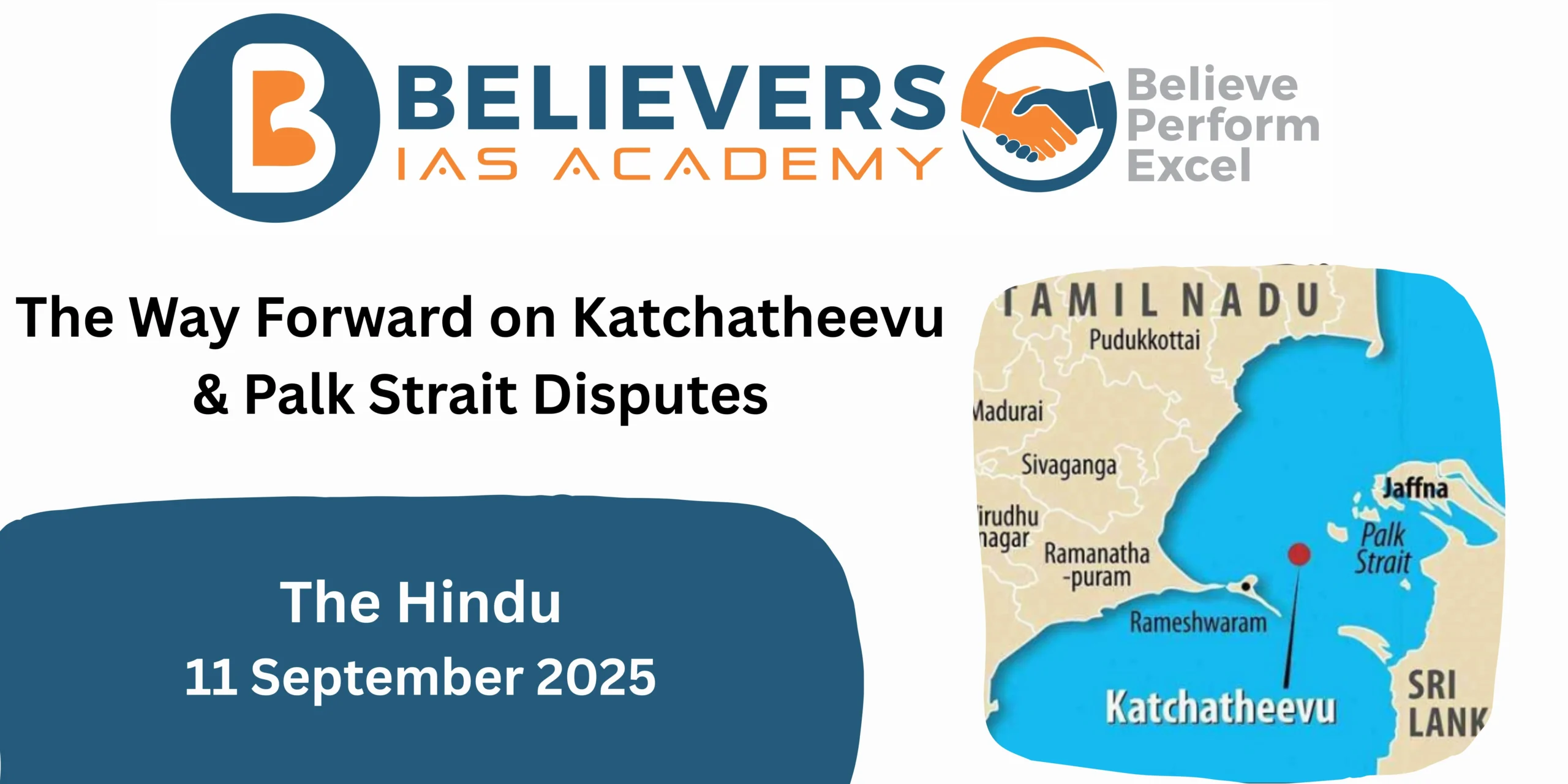
The Way Forward on Katchatheevu & Palk Strait Disputes
Context
- India has historically promoted peace via Panchsheel, NAM, SAARC, and the “Neighbourhood First Policy”.
- Yet, fisheries disputes in the Palk Straits and the sovereignty of Katchatheevu island remain irritants in India–Sri Lanka relations.
- PM Modi’s April 2025 visit to Colombo revived dialogue, stressing a “humane approach” balancing livelihoods with conservation.
Core Issues
1. Fisheries Conflict
- Shared waters: Traditionally used by Tamil Nadu fishers and Sri Lanka’s Northern Province communities.
- Problem: Indian mechanised trawlers cross into Sri Lankan waters, causing:
- Destruction of coral & shrimp habitats.
- Declining fish stocks.
- Loss for both Sri Lankan and Tamil Nadu’s artisanal fishers.
- Legal/Ecological framework:
- UNCLOS: Equitable & sustainable use.
- FAO (1995): Ban on destructive methods like bottom trawling.
- Sri Lanka banned trawling (2017), but illegal incursions continue.
2. Intra-Tamil Conflict
- Trawler operators (profit-driven, destructive).
- Artisanal fishers (sustainable, subsistence-dependent).
- Livelihood clash within Tamil communities.
3. Katchatheevu Issue
- Myth vs Reality:
- Portrayed as “gifted” by Indira Gandhi (false).
- 1974 Maritime Boundary Treaty placed it under Sri Lanka, based on historic administrative control.
- Legal status:
- Treaty binding under international law (“pacta sunt servanda”).
- Cannot be revoked without destabilising order.
- Katchatheevu sovereignty settled, unrelated to fishing rights.
- Historical precedents:
- ICJ Minquiers & Ecrehos Case (1953) – administrative control > historical claim.
- Rann of Kutch Arbitration (1968).
Possible Solutions
- Differentiate Stakeholders
- Protect artisanal fishers, not trawler operators.
- Allow regulated/seasonal access for Tamil Nadu’s small fishers with Sri Lankan consent.
- Community Sensitisation
- Tamil Nadu media & leaders to highlight hardships faced by Sri Lankan Tamils during the civil war.
- Emphasise bonds of fraternity (e.g., Tamil refugees in TN during conflict).
- Joint Management Models
- UNCLOS Art. 123: Cooperation in semi-enclosed seas.
- Examples: Baltic Sea Fisheries Convention.
- Possible steps:
- Shared quotas & seasonal fishing days.
- Joint marine research station on Katchatheevu.
- Investment in India’s deep-sea fishing (reducing pressure on near-shore waters).
- Multi-level Engagement
- Govt-to-Govt: Treaty obligations, trust.
- State/Provincial: Tamil Nadu & Northern Provincial Council cooperation.
- Community dialogue: Fisher unions on both sides.
Way Forward
- Fisheries issue: Needs ecological balance, livelihood protection, and empathy for artisanal fishers.
- Katchatheevu issue: Legally settled, should not cloud real concerns.
- Bigger picture: Prioritise South Asian peace, prosperity, and interdependence over narrow disputes.
Related Posts


UPSC Static Quiz, 25 June 2023
Posted on
