
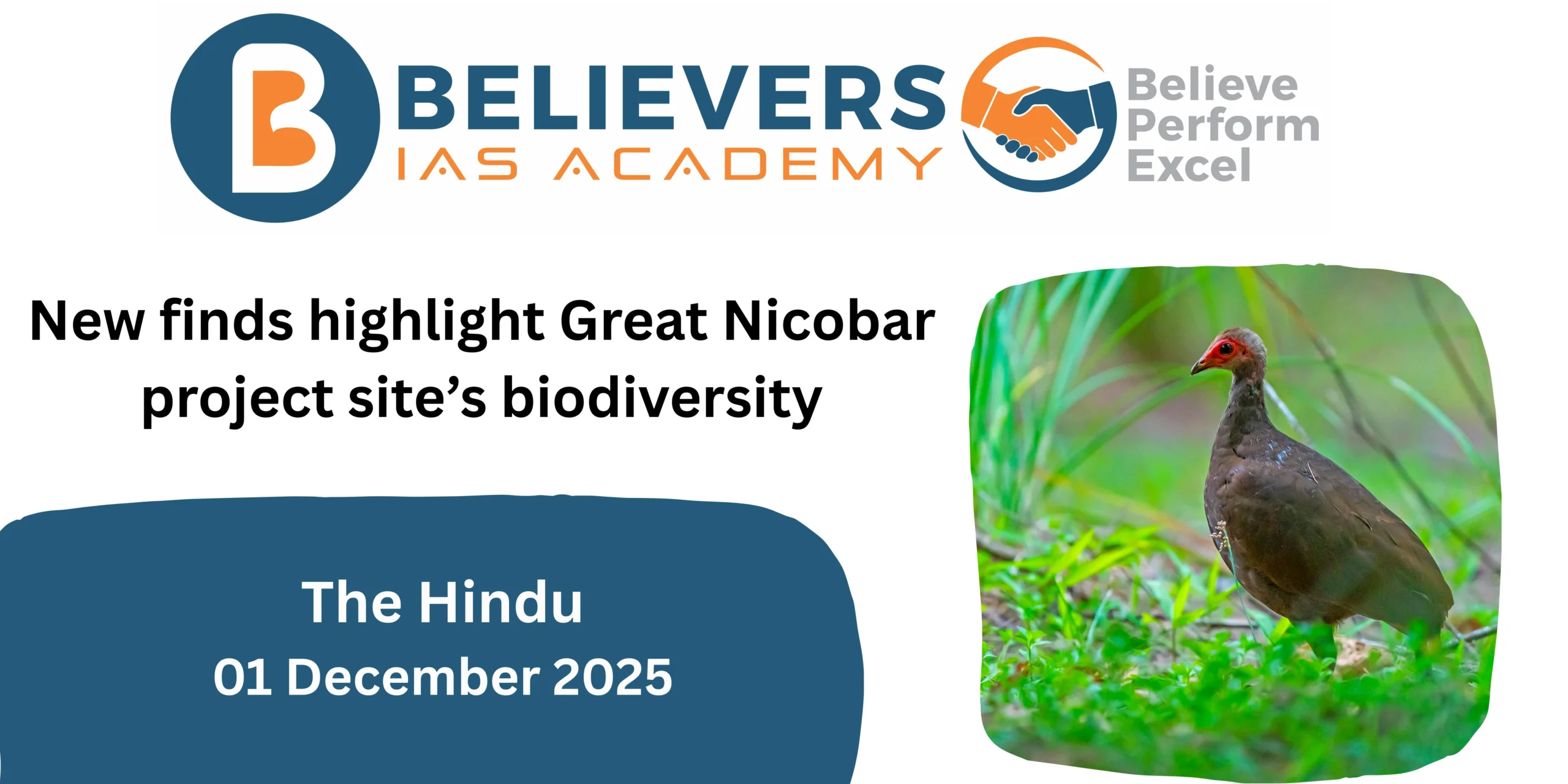
New finds highlight Great Nicobar project site’s biodiversity
Context
- Recent scientific studies have reported new species discoveries from the proposed Great Nicobar Island (GNI) mega infrastructure project site.
- These findings intensify concerns about ecological impact in one of India’s most biodiverse island ecosystems.
Key New Discoveries (2021–2025)
A. Newly Described Snake Species
- Name: Lycodon irwini (Irwin’s Wolf Snake)
- Described: November 2025 (journal Evolutionary Systematics)
- Records: Only four sightings so far
- Range: Highly restricted, eastern coast of Great Nicobar
- Conservation Concern: Recommended as Endangered (IUCN criteria)
B. Potential New Bird Species
- Great Nicobar Crake (Rallina sp.)
- Paper published in Indian Birds by birders Pia Sethi, Nitu Sethi, Vikram Shil
- Only three photographs in over a decade
- Very little known about its ecology or population
- Exhibits distinctive morphological features — possibly a new species to science
C. Other New Species (since 2021)
Nearly 40 species discovered, including:
- 2 frog species
- 4 crabs
- 2 geckos
- Numerous insects (flies, moths, beetles)
- Nearly 50% described in 2025 alone→ Indicates ongoing scientific under-exploratioBiodiversity Profile of Great Nicobar Island
Floral and Faunal Richness
- 650+ plant species
- 1,800+ faunal species
- ~24% endemism among select faunal groups
- One of India’s finest remaining tropical rainforests, according to eminent ornithologist Asad Rahmani.
Ecological Characteristics
- Part of the Indo-Burma and Sundaland biodiversity hotspots (overlapping influence)
- Critical habitats:
- Giant Leatherback Turtle nesting beaches
- Nicobar Megapode habitat
- Coastal mangroves, coral reefs, and evergreen rainforests
Conservation Concerns
A. Threat from Mega Infrastructure Project
- Proposed project includes:
- Transshipment port
- Airport
- Township
- Power plant
- May lead to:
- Habitat fragmentation
- Loss of endemic species
- Increased human presence and invasive species
- Disturbance to fragile coastal and forest ecosystems
B. High Endemism + New Species Discovery = High Risk
- Rare species with small ranges (e.g., Lycodon irwini) are extremely vulnerable to:
- Deforestation
- Infrastructure development
- Climate shocks (cyclones, sea-level rise)
C. Scientific Under-exploration
- Many regions still unexplored; rapid project clearance risks irreversible biodiversity loss before full documentation.
Expert Opinion
- Dr. Asad Rahmani (former Director, BNHS):
- Calls GNI’s forest the “finest tropical rainforest left in India”
- Urges for total protection
- Highlights extraordinary biodiversity value
Way Forward
- Strengthen independent ecological assessment before project execution.
- Recognise GNI as a priority conservation landscape.
- Conduct long-term biodiversity surveys.
- Adopt “avoid–mitigate–restore” framework for development.
- Engage tribal communities (particularly Shompen and Nicobarese) in decision-making.
- Consider alternative development models that sustain biodiversity and livelihoods.
Related Posts


Interpol General Assembly
Posted on
