

Eight Asiatic Lion Cubs Die from Suspected Babesia Infection in Gujarat
Context
Eight cubs of the Asiatic Lion have reportedly died in the Gir landscape of Gujarat due to a suspected outbreak of Babesiosis (Babesia infection). The incident has raised concerns because the Gir ecosystem hosts the world’s only wild population of Asiatic lions.
What is Babesia (Babesiosis)?
Definition
Babesiosis is a tick-borne parasitic disease caused by protozoan parasites belonging to the genus Babesia.
Transmission
- Primarily spread through the bite of infected ticks.
- Occasionally through blood transfusion or mother-to-offspring transmission in some species.
How does it affect animals?
The parasite infects red blood cells (RBCs) causing:
- Fever
- Weakness
- Anaemia
- Reduced immunity
- Coughing
- Nasal discharge
- Weight loss
- Death in severe cases
Animals Affected
- Livestock (cattle, buffaloes)
- Dogs and pets
- Wildlife species
- Humans (zoonotic disease)
Why is it dangerous in wildlife?
- Free movement of animals facilitates spread.
- Tick populations can increase rapidly.
- Monitoring and treatment become difficult in open habitats.
Measures Taken by Gujarat Forest Department
1. Large-Scale Tick Removal Operations
- Veterinary teams deployed.
- Tick control measures initiated.
2. Isolation of Infected Lions
- Sick animals shifted for treatment and observation.
3. Containment Zones
- High-risk areas identified and monitored.
4. Veterinary Surveillance
- Continuous health monitoring of lion populations.
5. Laboratory Testing
- Samples sent to the Gujarat Biotechnology Research Centre.
6. Emergency Rescue Preparedness
- Rapid response teams kept on standby.
7. High-Level Monitoring
- Forest Department and wildlife experts overseeing containment efforts.
Asiatic Lion
About
Scientific Name Panthera leo persica
Common Names
- Asiatic Lion
- Persian Lion
- Indian Lion
Endemism
The Asiatic lion is found exclusively in India.
Global Significance
India hosts the only surviving wild population of Asiatic lions in the world.
Historical Distribution
Earlier distributed across:
- Greece
- Turkey
- Iran
- Iraq
- Syria
- Palestine
- Arabian Peninsula
Today, it survives only in Gujarat.
Present Distribution
Found mainly in:
- Gir National Park and Wildlife Sanctuary
- Gir Protected Area
- Girnar
- Coastal forests
- Revenue lands surrounding Gir
2025 Census
- Approximately 891 lions
- Distributed across the Gir landscape and adjoining districts of Saurashtra.
Conservation Status
| Convention/Agency | Status |
|---|---|
| IUCN Red List | Vulnerable |
| CITES | Appendix I |
| Wildlife (Protection) Act, 1972 | Schedule I Protection |
Conservation Success
The IUCN upgraded the Asiatic lion from Endangered to Vulnerable due to successful conservation efforts.
Physical Characteristics
Distinctive Features
✔ Prominent longitudinal fold of skin along the belly
✔ Smaller body compared to African lions
✔ Less developed mane
✔ Ears visible through mane
✔ Relatively longer tail tuft
Average Weight
- Male: 160–190 kg
- Female: 110–120 kg
Asiatic Lion vs African Lion
| Feature | Asiatic Lion | African Lion |
|---|---|---|
| Scientific Name | Panthera leo persica | Panthera leo melanochaita |
| Distribution | India only | Sub-Saharan Africa |
| Size | Smaller | Larger |
| Mane | Shorter | Fuller and denser |
| Belly Fold | Present | Usually absent |
| Prides | Smaller | Larger |
| Population | ~891 | >20,000 |
| CITES Status | Appendix I | Appendix II |
| IUCN Status | Vulnerable | Vulnerable |
Habitat
Prefers:
- Dry deciduous forests
- Thorn scrub forests
- Savannah-type grasslands
- Open woodlands
Diet
Major prey species include:
- Chital
- Sambar
- Nilgai
- Wild boar
- Livestock (occasionally)
Ecological Importance
Keystone Species
Maintains ecological balance by regulating herbivore populations.
Umbrella Species
Protection of lions indirectly conserves:
- Forest ecosystems
- Other wildlife species
- Biodiversity
Flagship Species
Symbol of wildlife conservation in India.
Threats to Asiatic Lions
1. Disease Outbreaks
Examples:
- Babesiosis
- Canine Distemper Virus (CDV)
2. Single Population Risk
Nearly the entire population is concentrated in one landscape.
3. Inbreeding
Limited genetic diversity due to a common ancestry.
4. Human-Wildlife Conflict
- Livestock depredation
- Accidental encounters
5. Natural Disasters
- Droughts
- Floods
- Cyclones
6. Habitat Fragmentation
Expansion of roads, railways and settlements.
Conservation Initiatives
Project Lion
Launched by the Government of India for:
- Habitat improvement
- Disease management
- Genetic conservation
- Human-lion conflict mitigation
Lion Census
Conducted periodically by the Gujarat Forest Department.
Wildlife Health Monitoring
Regular veterinary surveillance and disease screening.
Habitat Expansion
Creation of satellite habitats outside core Gir areas.
Proposed Second Home
- Kuno National Park was identified as a potential second habitat for Asiatic lions to reduce extinction risks from a single population concentration.
Gir Landscape
Location
Situated in the Saurashtra region of Gujarat.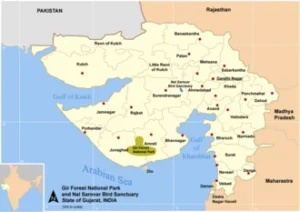
Ecosystem
Largest compact tract of dry deciduous forest in western India.
Major Rivers
- Hiran
- Shingoda
- Raval
- Machhundri
- Shetrunji
Important Flora
- Teak
- Khair
- Dudhlo
- Acacia species
Important Fauna
- Leopard
- Hyena
- Jackal
- Chital
- Sambar
- Nilgai
- Four-horned antelope
Maldhari Community
Who are they?
The Maldhari are traditional pastoralists living inside the Gir landscape.
Settlements
Called “Nesses”.
Significance
- Coexist with lions.
- Maintain a unique human-wildlife relationship.
- Important stakeholders in lion conservation.
Prelims Facts
✔ Scientific Name: Panthera leo persica
✔ Found only in Gujarat
✔ IUCN Status: Vulnerable
✔ CITES: Appendix I
✔ WPA, 1972: Schedule I
✔ World’s only wild population of Asiatic lions
✔ Distinct belly fold is a key identification feature
✔ Major threats: Disease outbreaks, inbreeding, habitat concentration, human-wildlife conflict
UPSC Mains Question
Q. Disease outbreaks such as Babesiosis highlight the vulnerability of species concentrated in a single habitat. Discuss the conservation challenges facing the Asiatic lion and evaluate measures taken to ensure its long-term survival. (15 Marks, 250 Words).
Related Posts

Russia ‘exits’ UN-brokered deal
Posted onCurrent Affairs Quiz – 10th April, 2022
Posted on
