
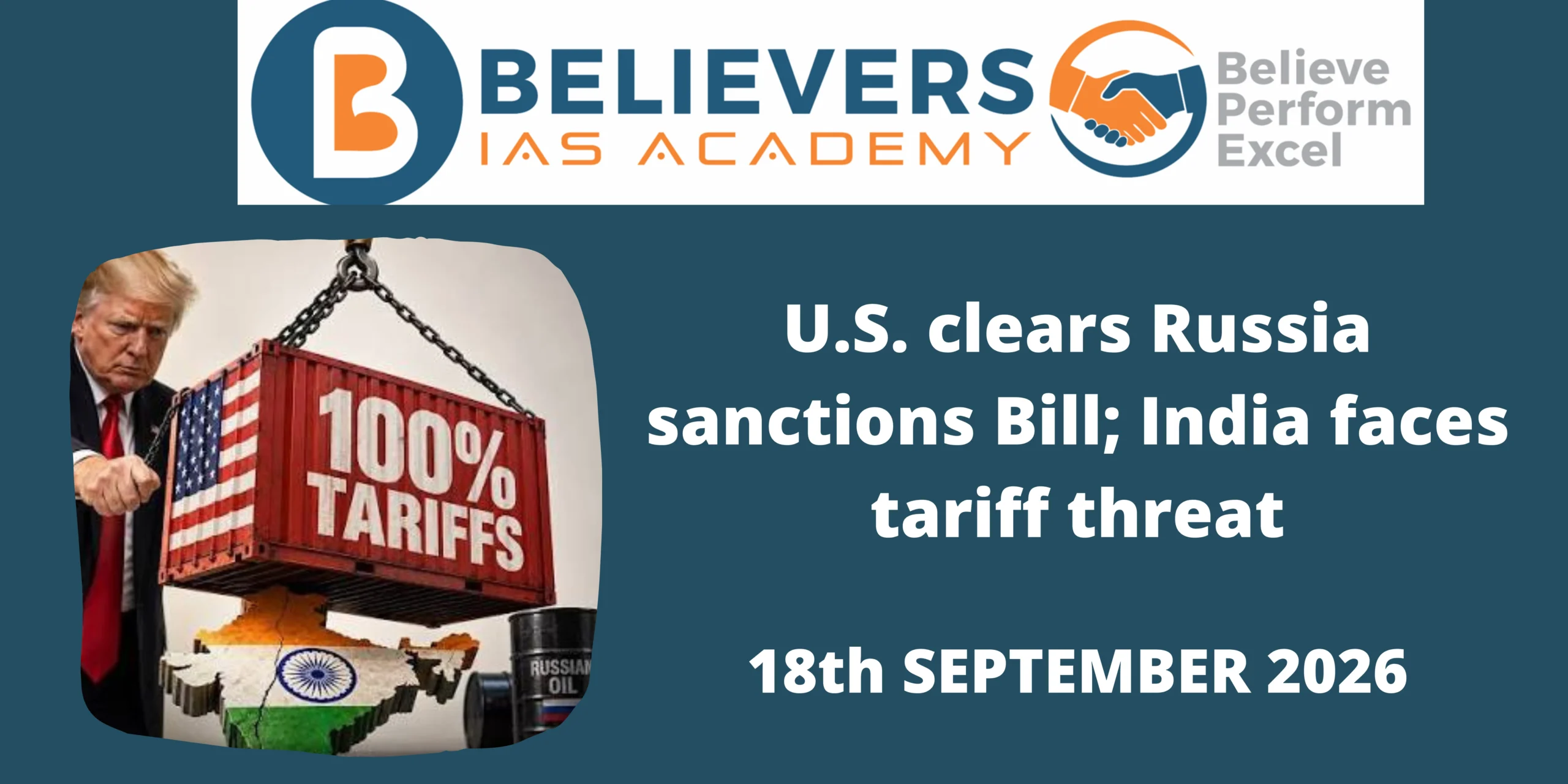
U.S. clears Russia sanctions Bill; India faces tariff threat
Subject: GS II- International Relations; GS III- Economy
Context
The U.S. House of Representatives passed sweeping legislation targeting Russia’s energy sector, individuals, and its maritime “shadow fleet.” Most notably, the measure introduces the potential authorization of tariffs of up to 100% on countries continuing to purchase Russian oil and gas, creating significant policy ripples for major emerging economies like India.
Key Highlights of the U.S. Legislation
-
Legislative Scope: Passed with a 262–159 vote, the bill links to the Senate’s “Lindsey O. Graham Sanctioning Russia and Iran Act.”
-
Presidential Discretion and Waivers: The legislation grants the U.S. President substantial discretion, permitting waivers if deemed to be in the U.S. national interest.
-
Targeted Thresholds and Exemptions:
-
The primary targets are major importers of Russian crude and natural gas, as well as countries deemed to be facilitating sanctions evasion.
-
Exemptions are envisaged for nations that have taken verifiable steps to scale down Russian gas imports or whose consumption constitutes less than 15% of Russia’s total gas exports.
-
Note on Naming: An amendment attempting to explicitly name top 10 importers—including India and China—was dropped from the final House version.
-
India’s Position: Balancing Energy Security and Strategic Autonomy
-
The Energy Security Imperative: India’s Ministry of External Affairs (MEA) reiterated that securing affordable energy for its 1.4 billion citizens remains paramount. Sourcing decisions are dictated strictly by market conditions and the need to diversify supply lines.
-
Economic Defense: New Delhi has maintained that it will firmly protect its trade and economic interests, emphasizing that heavy-handed secondary sanctions risk destabilizing global energy markets and straining bilateral ties.
-
The Discounted Crude Dynamic: Following the disruption of global energy markets post-2022, discounted Russian crude became an essential buffer for India, helping contain input costs for domestic refiners and stabilizing domestic fuel pricing.
Macroeconomic and Geopolitical Implications for India
-
The Tariff Threat and Bilateral Pressures: Coming amid complex U.S.–India trade negotiations, the threat of secondary tariffs (following earlier moves imposing cumulative levies over Russian oil imports) introduces friction into bilateral economic diplomacy.
-
Macroeconomic Vulnerability: India’s heavy import dependence for crude oil means that any forced curtailment of competitively priced supplies could widen the Current Account Deficit (CAD), fuel domestic inflation, and strain fiscal management.
-
The Test of Strategic Autonomy: The development underscores the friction between Western secondary sanctions architecture and India’s foundational foreign policy doctrine of strategic autonomy, which asserts that trade and energy sourcing must be guided by national interest rather than external geopolitical mandates.
Conclusion
The U.S. Russia sanctions bill highlights the weaponization of trade and financial infrastructure as instruments of geopolitical pressure. For India, successfully navigating this pressure requires balancing robust diplomatic engagement with Washington while vigorously defending its sovereign energy sourcing rights to protect domestic macroeconomic stability.
Related Posts


Commercial Banking Sector: An Overview
Posted on
