
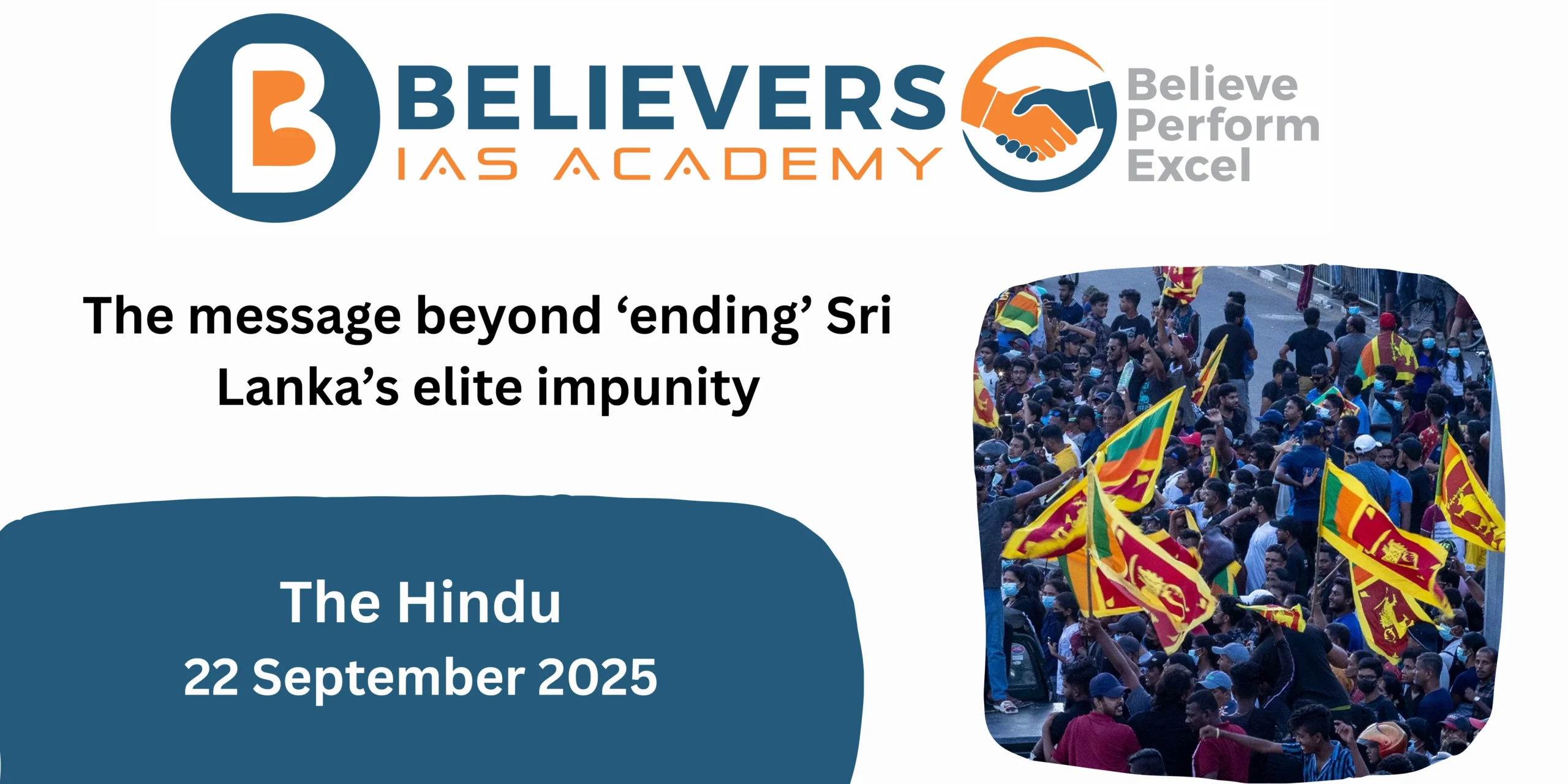
The message beyond ‘ending’ Sri Lanka’s elite impunity
Context
-
Former Sri Lankan President Ranil Wickremesinghe arrested (Aug 2025) for misuse of public funds worth LKR 16.2 million (~$50,000) during a private UK trip.
-
Arrest reflects Sri Lanka’s shifting public perception towards elite accountability post–2022 protests.
Key Developments
-
The Arrest
-
Wickremesinghe accused of using taxpayer funds for a personal trip.
-
Supporters claim it is political revenge by the ruling National People’s Power (NPP) government.
-
International concern: leaders from India & Maldives expressed unease.
-
-
Public Sentiment
-
Public views expenditure through everyday struggles lens → ₹16.2 million = 18 years’ income for median household.
-
Refusal to tolerate elite “carelessness”.
-
-
Historical Context
-
2015: Wickremesinghe rose on an anti-corruption wave (“Yahapalana government”).
-
2019: Gotabaya Rajapaksa elected on corruption-free promise, later ousted (2022 protests).
-
2022 Protests: Calls for accountability; strong resentment against excesses of political class.
-
-
Political Risks for NPP
-
Risk of antagonising old establishment (Rajapaksas, ex-Presidents).
-
Spotlight on NPP itself → if elite figures are prosecuted for small sums, NPP MPs must also face scrutiny.
-
Already, allegations of corruption within NPP ministers under investigation.
-
Analysis / Implications
Positive Signals
-
Symbolic end to “elite impunity.”
-
Reinforces rule of law and accountability.
-
Demonstrates political will to charge even former Presidents.
Challenges
-
Charges seem trivial compared to larger scams (e.g., LKR 144 million medicine scam).
-
Risk of political vendetta narrative undermining credibility.
-
May destabilise governance if extended political backlash emerges.
Broader Democratic Significance
-
Public reshaping relationship with political power.
-
Push towards mature democracy where leaders are judged by transparency and accountability.
-
Raises standards of political ethics in developing nations.
Way Forward
-
Apply uniform yardstick: accountability must extend beyond Opposition to ruling NPP members.
-
Ensure judicial independence to avoid perception of vendetta.
-
Institutionalise anti-corruption watchdogs for transparency.
-
India → watch developments closely due to regional stability and diaspora concerns.


