
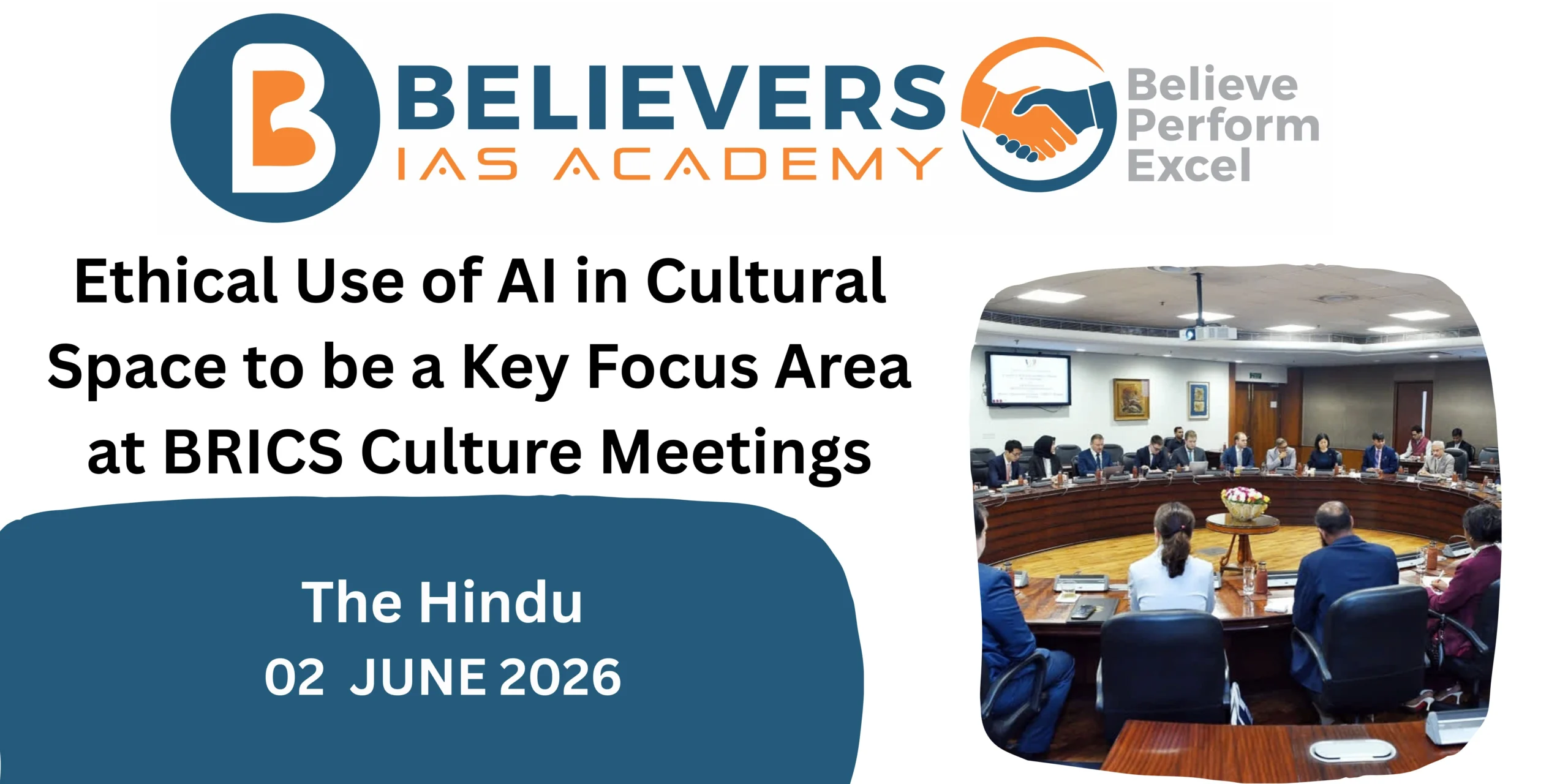
Ethical Use of AI in Cultural Space to be a Key Focus Area at BRICS Culture Meetings
Context
The ethical use of Artificial Intelligence (AI) in the cultural and creative sector will be a major focus of discussions during the BRICS Culture Working Group (CWG) meetings under the BRICS Culture Track 2026. The initiative aims to promote responsible use of emerging technologies while preserving cultural diversity, heritage, and creative rights.
About BRICS
What is BRICS?
BRICS is an intergovernmental grouping of major emerging economies that promotes cooperation in:
- Economic development
- Trade and investment
- Global governance reforms
- Cultural and people-to-people exchanges
- Sustainable development
Members of BRICS (2026)
- Brazil
- Russia
- India
- China
- South Africa
- Egypt
- Ethiopia
- Iran
- Saudi Arabia
- United Arab Emirates
- Indonesia
BRICS Partner Countries
Belarus, Bolivia, Kazakhstan, Cuba, Malaysia, Nigeria, Thailand, Uganda, Uzbekistan, and Vietnam.
Objectives of BRICS
- Promote a multipolar world order.
- Strengthen South-South cooperation.
- Reform global financial and governance institutions.
- Enhance collaboration in trade, technology, culture, and sustainable development.
BRICS Culture Track 2026
Roadmap
- First CWG Meeting: Virtual (29–30 April 2026)
- Second CWG Meeting: Varanasi
- Third CWG Meeting: Bhopal
- BRICS Culture Festival
- BRICS Culture Ministers’ Meeting
- BRICS Theatre Festival in Delhi (October 2026)
Key Themes of Discussion
1. Creative Economy and People-to-People Cooperation
- Enhancing cultural exchanges.
- Promoting creative industries and cultural entrepreneurship.
2. Copyright and Ethical AI in the Creative Economy
- Protecting intellectual property rights.
- Ensuring responsible use of AI-generated content.
- Addressing issues of authorship, ownership, and bias in AI systems.
3. Cultural Heritage Protection and Return of Cultural Property
- Preventing illicit trafficking of cultural artefacts.
- Facilitating repatriation of stolen heritage objects.
4. Collaborative Approaches to Safeguarding Shared Heritage
- Joint conservation initiatives.
- Knowledge-sharing among BRICS nations.
5. Culture as a Driver of Sustainable Development
- Linking culture with economic growth.
- Supporting inclusive and sustainable development goals.
Why Ethical AI in Culture Matters?
Opportunities
- Digital preservation of heritage.
- AI-assisted translation and documentation.
- Wider access to cultural resources.
- Promotion of creative industries.
Challenges
- Copyright infringement.
- Deepfakes and misinformation.
- Cultural bias in AI systems.
- Misappropriation of traditional knowledge and indigenous cultural expressions.
Significance for India
- Positions India as a leader in global discussions on ethical AI governance.
- Showcases India’s rich cultural heritage through meetings in Varanasi and Bhopal.
- Strengthens cultural diplomacy within the Global South.
- Aligns with India’s vision of responsible and inclusive technology development.
UPSC Mains Value Addition
“The integration of Artificial Intelligence into the cultural sector offers immense opportunities for preservation and innovation, but its long-term success depends on ethical governance, protection of intellectual property, and respect for cultural diversity.”
Possible Mains Question
“Discuss the opportunities and challenges posed by Artificial Intelligence in the cultural and creative sectors. How can BRICS contribute to developing an ethical framework for AI in culture?” (250 words)


