
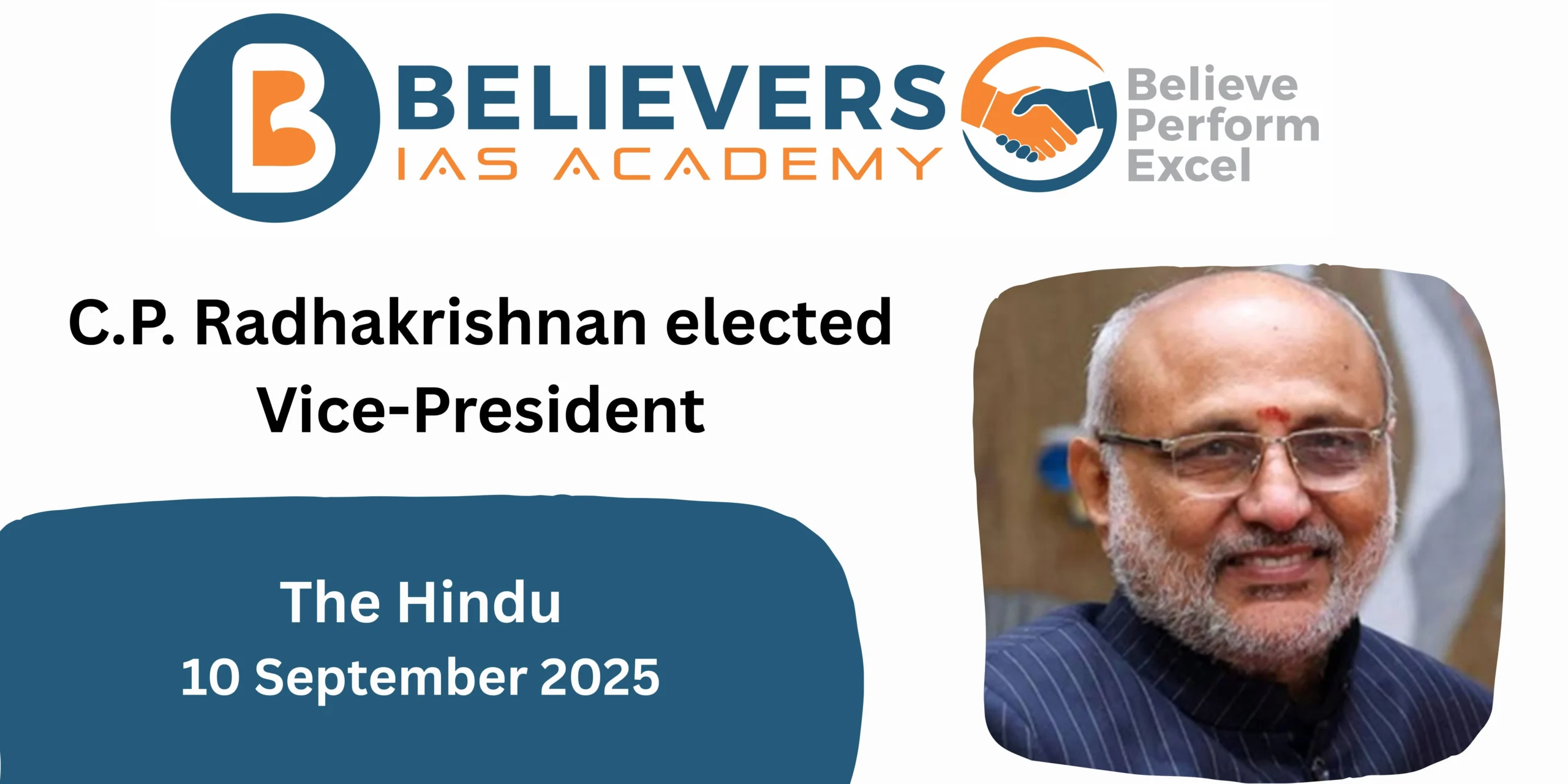
C.P. Radhakrishnan elected Vice-President
Background
- The election was conducted on September 9, 2025, to choose the 17th Vice-President of India.
- Electoral College: 781 members (after 7 vacancies) from both Lok Sabha and Rajya Sabha.
- Turnout: 767 MPs cast their votes (98.2%).
Results
- P. Radhakrishnan (NDA nominee, Maharashtra Governor): 452 first-preference votes.
- Justice B. Sudershan Reddy (Opposition nominee, former Supreme Court Judge): 300 votes.
- Invalid votes: 15.
- Abstentions: 14 MPs.
- Margin of victory: 152 votes.
Key Highlights
- Cross-voting Evidence
- NDA strength: 439 → secured 452 votes (+13).
- Opposition expected: 324 → secured 300 (-24).
- Indicates cross-voting by Opposition MPs, undermining Opposition unity.
Implications
- For NDA
- Reinforces dominance in Parliament.
- Cross-voting suggests wider acceptance of NDA leadership among non-allied MPs.
- Strengthens BJP’s ideological claim of nationalism as a unifying factor.
- For Opposition
- Despite unity under INDIA alliance, shortfall in votes highlights cracks.
- Moral high ground claimed, but loss exposes lack of discipline and cohesion.
- Yet, improved vote share compared to 2022 provides some consolation and momentum.
- For Indian Politics
- Vice-President as Chairman of Rajya Sabha: His handling will shape legislative debates and Opposition space.
- Sets the stage for 2026 Rajya Sabha elections and political alignments ahead of 2029 General Elections.
Vice-President of India – Key Facts
- Constitutional Provisions: Article 63–71 of the Indian Constitution.
- Position: 2nd highest constitutional office after the President.
- Election:
- Elected by an electoral college of both Houses of Parliament (Lok Sabha + Rajya Sabha).
- Voting: Proportional representation by single transferable vote (STV), through secret ballot.
- Eligibility:
- Citizen of India, 35 years or above.
- Qualified for election as Rajya Sabha member.
- Tenure: 5 years; eligible for re-election.
Functions
- Ex-officio Chairman of Rajya Sabha – Presides over the Upper House, maintains order, ensures legislative functioning.
- Acting President – Discharges functions of President in case of death, resignation, or removal until a new President is elected.
- Represents India in official ceremonies and fosters parliamentary discourse.
Significance
- Ensures checks and balances within parliamentary democracy.
- Crucial in safeguarding Opposition’s voice in Rajya Sabha.
- Role combines political neutrality (as presiding officer) with constitutional responsibility (as successor to President)


